



The complete interview to read:
What is important for a kindergarten room concept?
A good kindergarten setup doesn't happen by chance. The room concept for children combines five areas:
- Room architecture
- Furniture
- Room design
- Play and learning materials
- Organisation and order
Only when these areas fit together does a kindergarten room become a learning environment where children enjoy playing, discovering, and finding peace.
It is important not to view the room merely as a surface. Doors, windows, washbasins, light, pathways, and existing architecture strongly influence how well a kindergarten functions in everyday life.
What distinguishes modern kindergarten furnishings from classic ideas?
Classically, when it comes to kindergarten furnishings, furniture is often the first thought. What tables are needed? What shelves? What chairs?
A modern children's room concept goes further. It first asks:
- How do children move through the space?
- Where do restlessness or conflicts arise?
- Where is retreat needed?
- Where should materials be openly accessible?
- What needs to be hidden behind closed cabinets?
A practical example: a painting table should not be far from the washbasin. Such details seem small, but make a big difference in everyday kindergarten life.
The atmosphere also counts. Plants, carpets, curtains, baskets, and natural materials can contribute a lot to making a room feel warmer and calmer.
How does a kindergarten furnishing consultation work?
A consultation begins with the existing space. Depending on the location, it takes place on-site or online. Often, a floor plan and a few photos are enough to develop initial recommendations.
This involves checking:
- What architecture is present?
- Where are doors, windows, and water connections?
- Which furniture is really necessary?
- What traffic routes are created for the children?
- Which areas appear cluttered?
- Where is more peace or openness needed?
Based on this, concrete recommendations for suitable furniture and room design are developed. This does not simply create a furniture list. Each recommendation also includes the reason why this piece of furniture is useful in the room.
What small changes have a big impact on kindergarten furnishings?
Often, the greatest impact comes from reducing furniture. Many kindergartens contain more furniture than they actually need in everyday life. If superfluous items are removed, the room immediately appears brighter, more open, and calmer.
Particularly effective are:
- using only necessary furniture
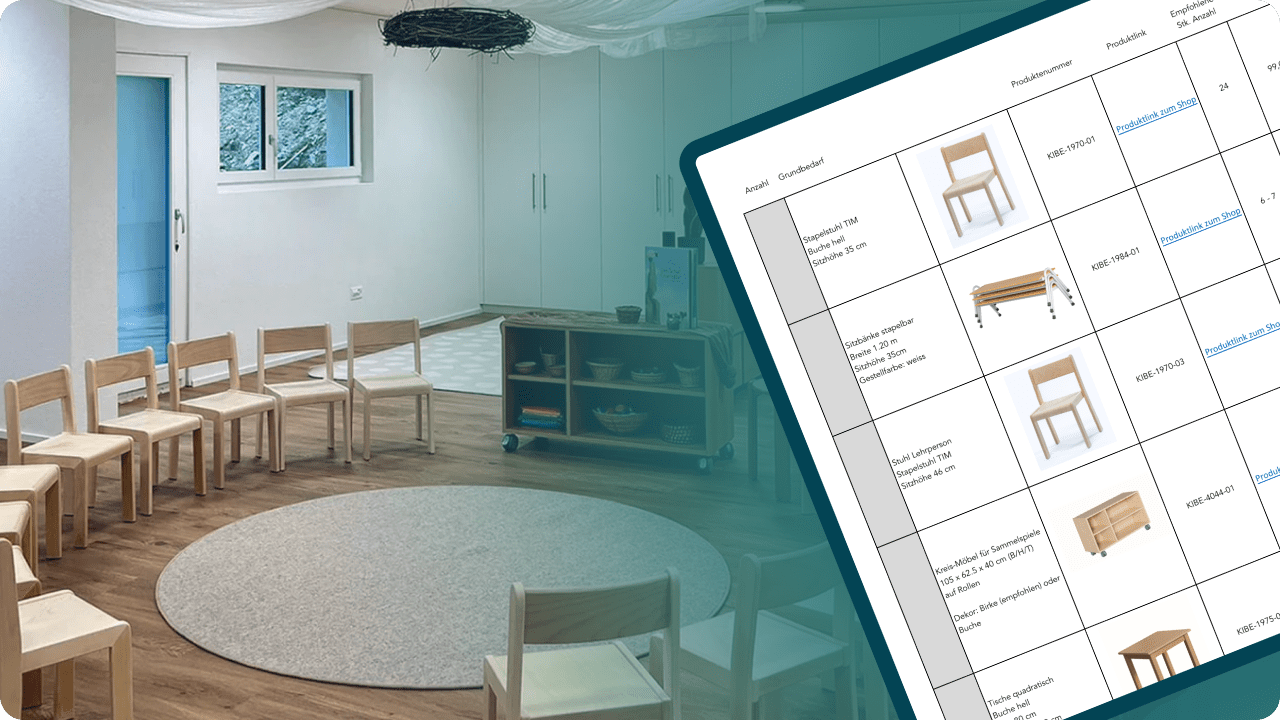
- planning the circle centrally in the room
- consciously designing traffic routes
- not just placing furniture against walls
- creating open areas for movement
- integrating plants, carpets, and fabrics
A centered circle can transform the entire room. It provides orientation, feels inviting, and gives the kindergarten a clear focal point. Around it, play areas, workspaces, and retreat zones can be harmoniously planned.
What aspects should be considered when selecting kindergarten furniture?
When it comes to furniture, less is more. Good kindergarten furniture should not only look good but also function effectively in everyday use.
The following points are particularly important:
- color-neutral and natural materials
- high-quality and sturdy craftsmanship
- maximum flexibility
- furniture on wheels, where appropriate
- closed cabinets for teacher materials
- open display for children's materials
- different work and seating heights
Wood, calm colors, and clear shapes help to reduce sensory overload. At the same time, furniture should be robust enough for children to use it versatilely in their play.
Flexible furniture on wheels is particularly practical. It quickly creates space for movement, theater, rhythm, circle games, or larger group activities.
Why are different workstation heights important in kindergarten?
Children don't all learn the same way. Some like to work at a table, others on the floor; some prefer to stand or move around in between.
Therefore, a good kindergarten setup should offer various work options:
- carpet area
- floor table
- normal table
- standing table
- Height-adjustable table
- Movable seating
Variety is also beneficial for seating. In addition to classic kindergarten chairs, seat cushions, movable stools or exercise balls can be used. This allows children to choose the posture that suits their activity and needs.
This supports concentration, movement and independence.
What feedback do you receive after a successful kindergarten setup?
When a kindergarten is set up holistically, not only the rooms but also daily life often change.
Common feedback includes:
- quieter start with the children
- fewer conflicts
- more space for movement
- longer immersion in play
- more intrinsic motivation
- more harmonious atmosphere
- stronger sense of well-being in the room
Children find it easier to play because materials are clearly presented. They get in each other's way less because paths are clearer. At the same time, the room feels calmer because there are fewer visual stimuli.
Teachers also benefit greatly. Many report that they feel much more comfortable in the newly designed kindergarten and can work more relaxed.
How is the room concept maintained in the long term?
A good room concept is designed for the long term. If furniture has been deliberately placed, it does not have to be constantly rearranged.
It is important that the basic structure is maintained. The play areas can change, for example:
- Swap building corner and role play
- Re-use craft area
- Change play materials seasonally
- Exchange individual offers
However, the furniture should remain as much as possible where it was planned. Its position has a function: it directs paths, creates zones, reduces restlessness and supports the overall atmosphere.
Those who also work with checklists and further training can more easily maintain and develop the concept in everyday life.
Conclusion: Good kindergarten furnishing is more than buying furniture
A successful kindergarten setup is created by the interplay of architecture, furniture, design, materials and order. It is not enough to put beautiful furniture in a room.
The key is how the room functions in everyday life. Children need space, orientation, calm, movement and easily accessible materials. Teachers need order, an overview and an environment in which they enjoy working.
Those who plan the kindergarten setup holistically not only create a beautiful space. A learning and feel-good environment is created that allows children to play more independently, calmly and deeply.